Global Rocket Market Surges Past $24 Billion in 2026 as Reusability and Satellite Demand Fuel New Space Race
May 31, 2026 — The global space launch industry is experiencing unprecedented growth in 2026, with market valuations climbing sharply as commercial demand for satellite constellations, defense payloads, and space tourism drives a new era of innovation and competition.
Market Hits Record Valuations
The global space launch services market is projected to reach $24.03 billion in 2026, up from $21.19 billion in 2025, and is forecast to soar to approximately $70.56 billion by 2035 at a compound annual growth rate (CAGR) of 11.56% . The reusable rocket segment alone is valued at $3.83 billion in 2026 and is expected to nearly double to $6.94 billion by 2030, reflecting a robust 16% CAGR .Meanwhile, the broader carrier rocket market is expected to grow from $13.69 billion in 2025 to $15.06 billion in 2026, marking a 10% year-over-year increase
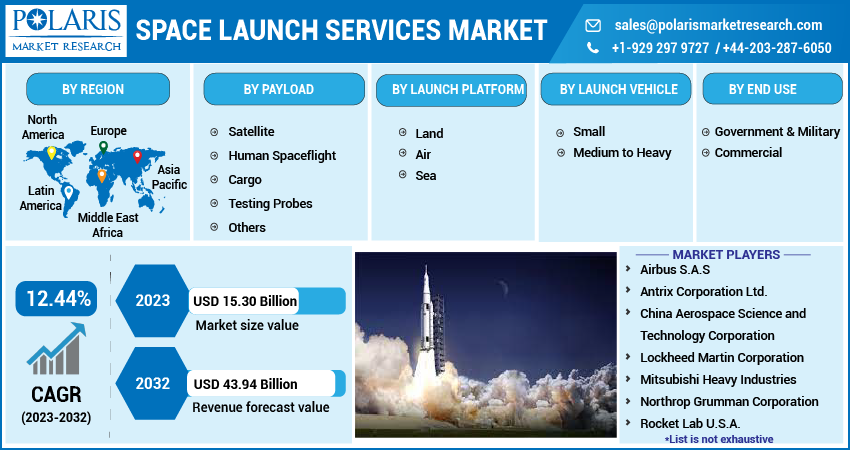
Infographics showing the projected growth of the global space launch services market, commercial space launch market, and commercial satellite launch service market.
Key Drivers: Reusability and Satellite Constellations
The surge is being driven by several converging factors. The proliferation of Low Earth Orbit (LEO) satellite mega-constellations—spearheaded by SpaceX's Starlink, Amazon's Project Kuiper (LeoSat), and China's Guowang/Qianfan networks—is fundamentally transforming the industry. In 2024 alone, a record 2,695 satellites were deployed globally, with satellite broadband revenue growing by 29% .Reusable rocket technology, pioneered by SpaceX's Falcon 9 and now being advanced by competitors, has dramatically reduced launch costs per mission. This cost efficiency is enabling more frequent launches and opening access to space for a broader range of customers, from government agencies to private startups .
Global Players and 2026 Milestones
North America continues to dominate the market, generating over 40% of global revenue in 2025, thanks to strong government support and a thriving private sector led by SpaceX, Blue Origin, and Rocket Lab . SpaceX remains the industry leader with its Starship program and Starlink v3 direct-to-cell satellite service, while rumors of a potential IPO in late 2026 or 2027 continue to circulate, with the company valued at an estimated $1.5 trillion .Blue Origin is accelerating its "go" phase with the New Glenn heavy-lift rocket, focusing on operational booster reusability and its TeraWave satellite network to challenge Starlink. The company has temporarily paused its New Shepard suborbital program to concentrate on larger orbital and lunar missions .Rocket Lab is scaling into the medium-lift market with its Neutron rocket, targeting a maiden flight in Q4 2026. The company is also diversifying beyond launch services, with space systems now accounting for over 60% of its revenue
European rockets including Ariane 6 and emerging launchers, and a SpaceX Falcon 9 launch from Cape Canaveral.
Asia-Pacific: The Fastest-Growing Region
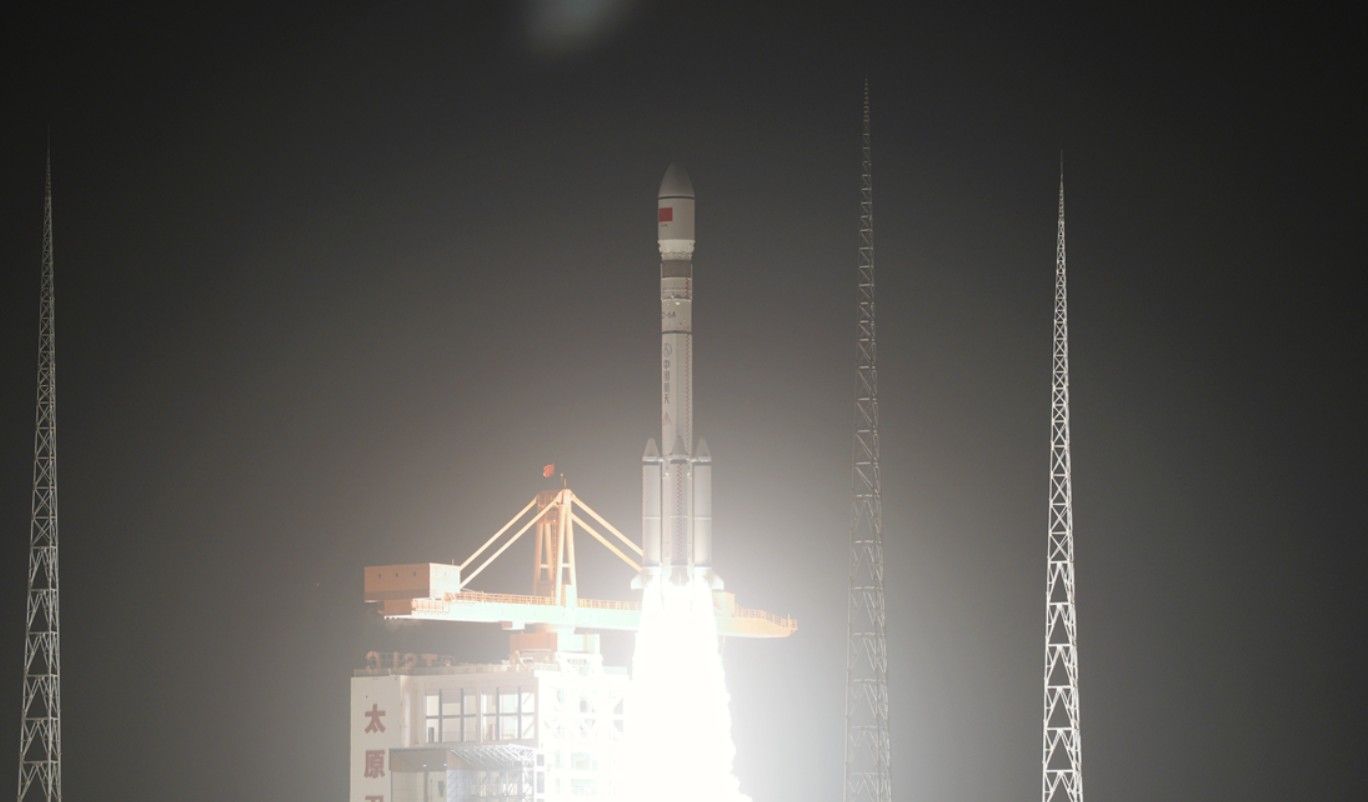
Asia-Pacific is poised to be the fastest-growing region through 2035. China's state-owned CASC and emerging private firms like iSpace and LandSpace are ramping up launch cadence. In early 2026, China's Long March 8 and Long March 6A rockets successfully deployed batches of Guowang and Qianfan satellites . India's commercial sector is also surging, with companies like Skyroot Aerospace and Agnikul offering low-cost small-satellite launch alternatives. Agnikul is targeting its first commercial orbital launch in Q3 2026 .A Chinese Long March rocket launch in 2026 and a commercial sea launch from China's burgeoning private space sector.
Europe and New Entrants
In Europe, Isar Aerospace is preparing for the second flight of its Spectrum rocket from Norway's Andøya Spaceport, carrying cubesats under ESA's "Boost!" program . European aerospace giants including Airbus, Leonardo, and Thales are consolidating efforts to strengthen their market presence .Other notable 2026 milestones include Sierra Space's Dream Chaser "Tenacity" free-flying demonstration mission, showcasing autonomous winged spacecraft landing capabilities, and Boeing's Starliner-1 uncrewed flight test .
Challenges Ahead
Despite the optimism, the industry faces significant hurdles. The accumulation of orbital debris poses collision risks that complicate trajectory planning and drive up insurance costs . Additionally, global trade tensions and tariff challenges are affecting production costs and encouraging companies to pursue more localized and integrated supply chains .
Outlook
With launch attempts hitting record highs—223 in 2024 according to the Space Foundation—and 2026 on track to exceed that pace, the rocket industry is firmly in a new golden age. As reusable technology matures, satellite demand explodes, and new players from Asia, Europe, and beyond enter the fray, the global space economy is set to redefine commerce, communications, and exploration for decades to come.A stunning night launch arc from 2026 and NASA's Artemis mission preparations, symbolizing the dawn of a new space era.